
Crime Simulator Review: Addictive Co-Op Burglary Fun
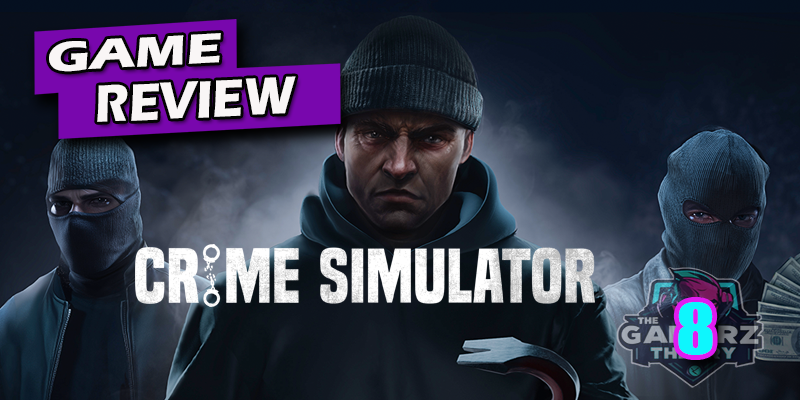
Crime Simulator is a lighthearted fantasy about sneaky thieves and bold burglaries. The core of the gameplay is an endorphin escalator that is even better when played with friends.
Its depth and difficulty can be very approachable and are mostly determined by the player's choices. Although it lacks complexity, its moment-to-moment gameplay more than justifies the experience.
Dance with the devil
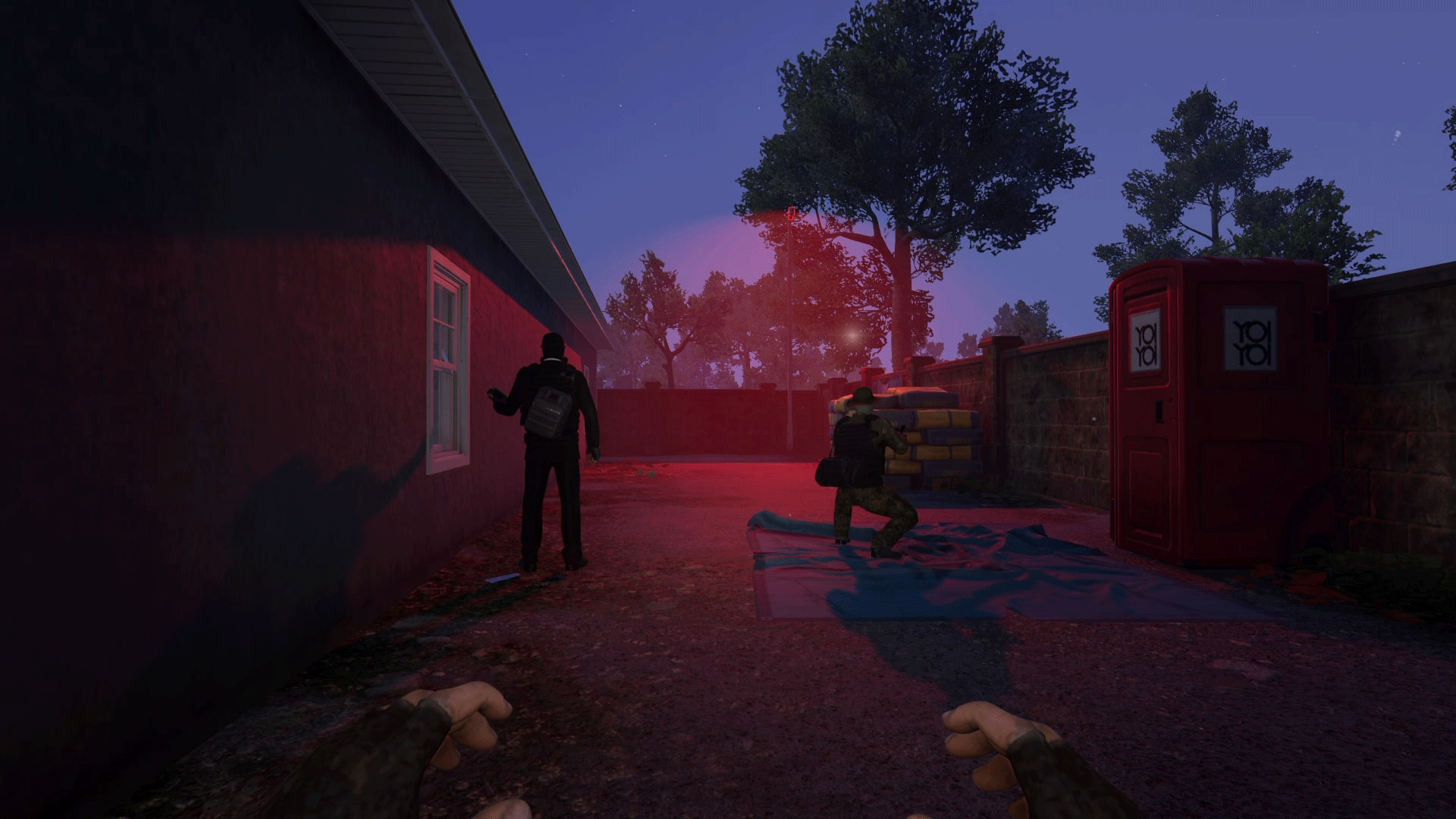
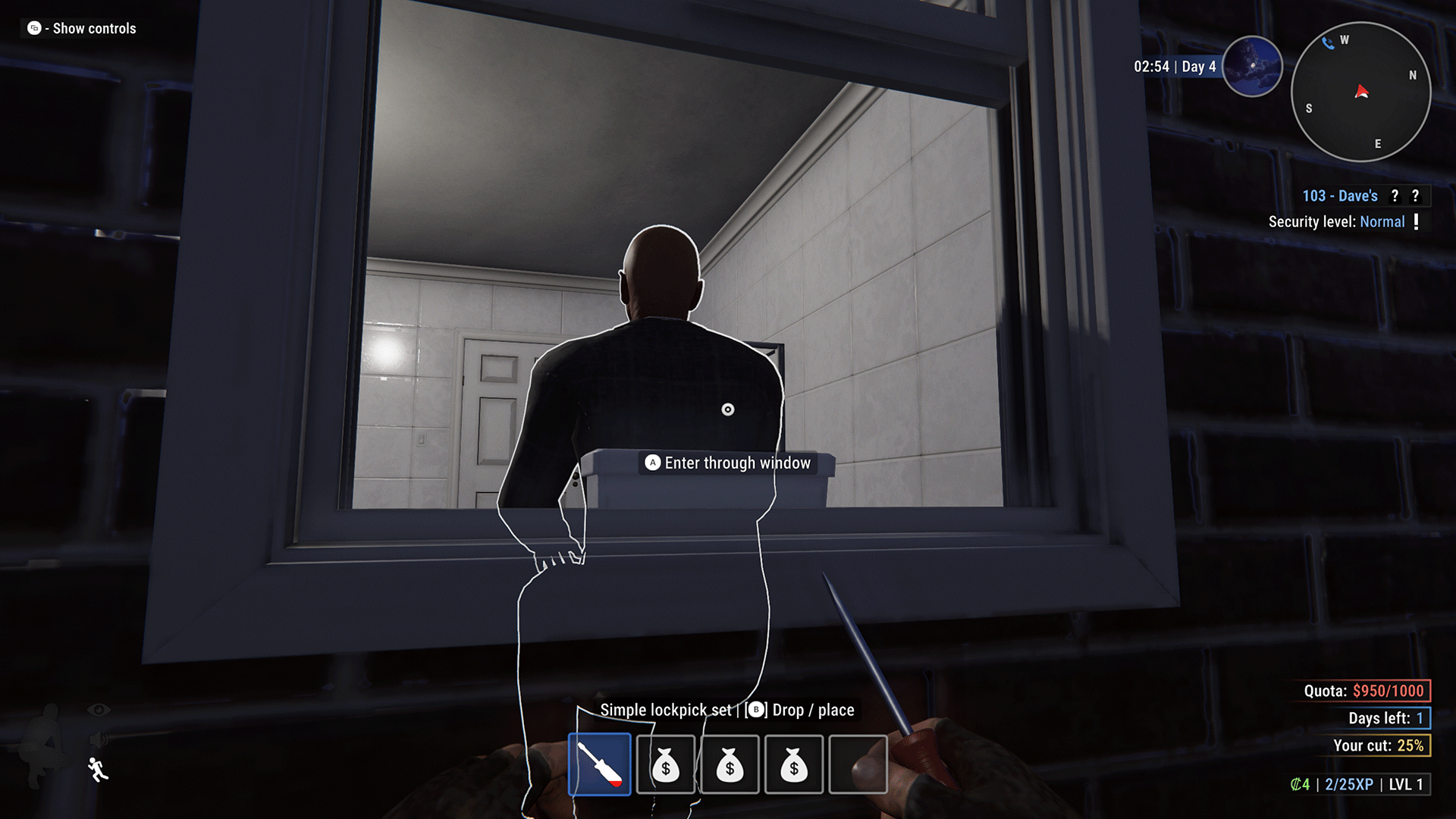
The game has a playful, soft graphic style that takes the edge off of what could be a dark video game. The environment is pleasant; the houses are big and easy to navigate. NPC’s go about their nightly routines, often bumbling around for the bathroom or the occasional Pilates session. Even though it is possible to zip-tie and interrogate victims, the design language of the game brings that grim aspect of crime down to tolerable levels.
Crime Simulator is a playground of burglary and serial theft across three main locations; but the obvious question arises: why am I such a reckless reprobate?
A Deal with the Devil
The game begins with our protagonist in jail. A Prisoner Release Form offers freedom at a price, and with our signature the conditions are set. The form states that your bail is $50,000 and our creditors demand regular payment. Presumably our protagonist was already a seasoned thief and that activity may have led to their arrest, which led to this situation; but in any case we must utilize a number of tools and tactics to pillage the townsfolk.
Idle Hands are the Devil's Playthings
The gameplay principle speaks to an instinct within the player to hoard all of the in-game items. Regardless of genre, players have been conditioned by years of collecting high-value items in games such as the Elder Scrolls series. The act of acquiring a ton of loot is a fundamental part of gaming, and in Crime Simulator the player is in control. Whether you want to stalk the perimeter of a house and carefully loot soft targets or pull off high-risk, high-reward smash-and-grabs, the choice is up to the player and how confident they are in their abilities. A more reserved player may choose to hit a high number of low-security targets for a gratifying payoff.
Moving slowly, observing the target to spot cameras or witnesses, and picking simple locks can provide a rush at the beginning of the game. As the player becomes more comfortable with the lockpicking minigames and the routine of sweeping a house, the game becomes more about long-term goals such as completing jobs and stealing enough loot to purchase furniture for your hideout. Jobs will offer a reward for completing a specific objective. Most of the time these jobs will guide the player along a path of fun activities and can often teach the importance of tactical stealth.
The Devil is in the Details
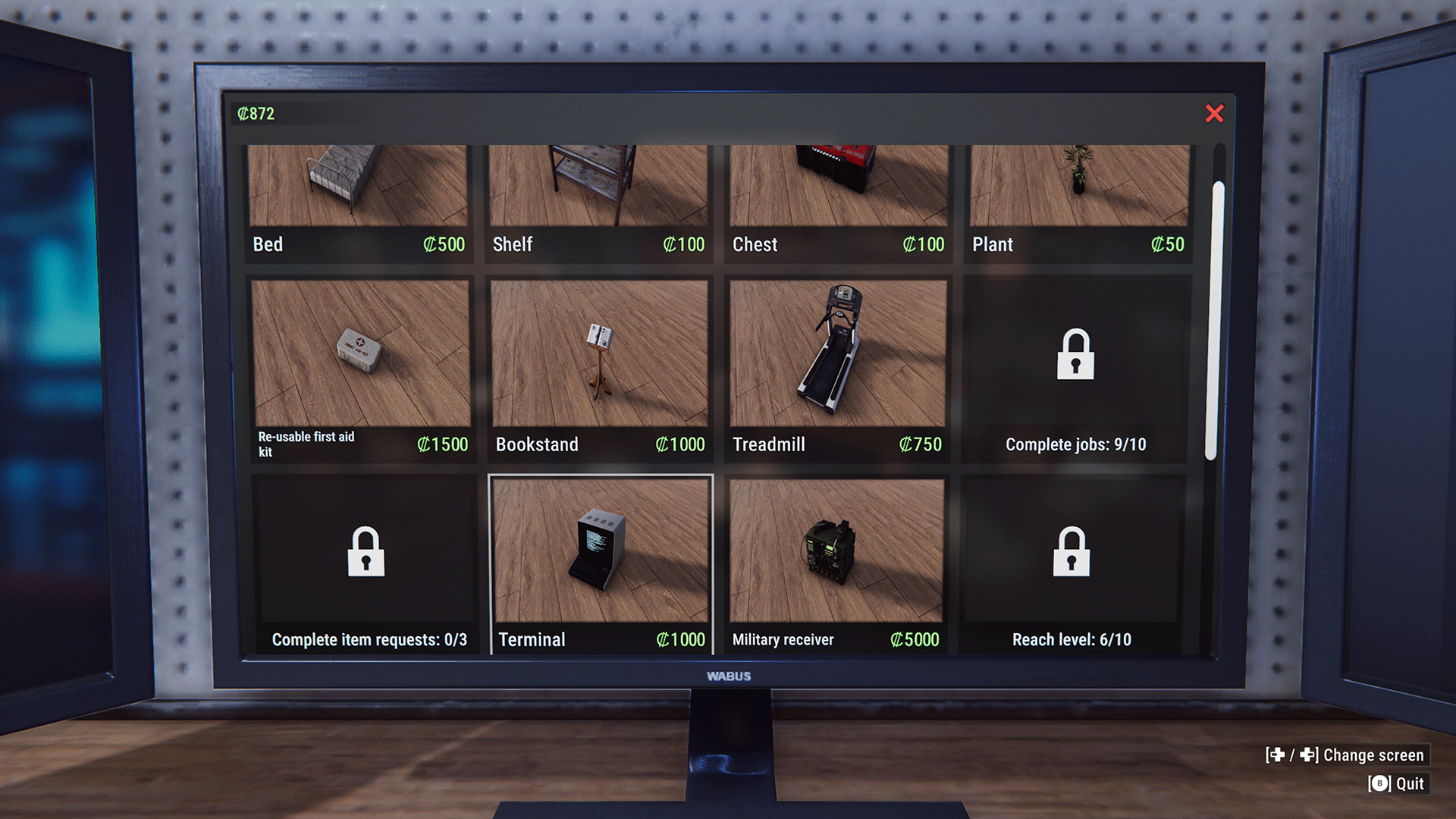
The player receives a cut of the profits from each bail payment made. This income plus the rewards for completing jobs, will be required to buy lockpicks and crowbars, for example; but as mentioned before, this money can also be used to buy furniture in your hideout. The hideout serves as your home base between runs and the game functions as a roguelite in this element. You return to this location to turn in your loot, access the marketplace, and embark on new runs. The furniture can spruce up the appearance of your empty lair, but its main purpose is to provide stat boosts. Buying a treadmill will increase your running speed, for example. This long-term character progression in addition to a skill system provides hours and hours of potential game longevity. I can easily picture addicts of the gameplay loop spending hours grinding enough cash to buff their character or simply stealing enough loot to fill their lair like some kind of Smaug-style mountain of treasure.
Crime Simulator is designed to be played for a very long time. The long-term hideout and character building are supported by a long list of aforementioned jobs. These jobs function as challenges and provide a decent list of objectives for players to complete, but that is not the only feature. Crime Simulator has a few different game modes that can be selected to alter the rules.
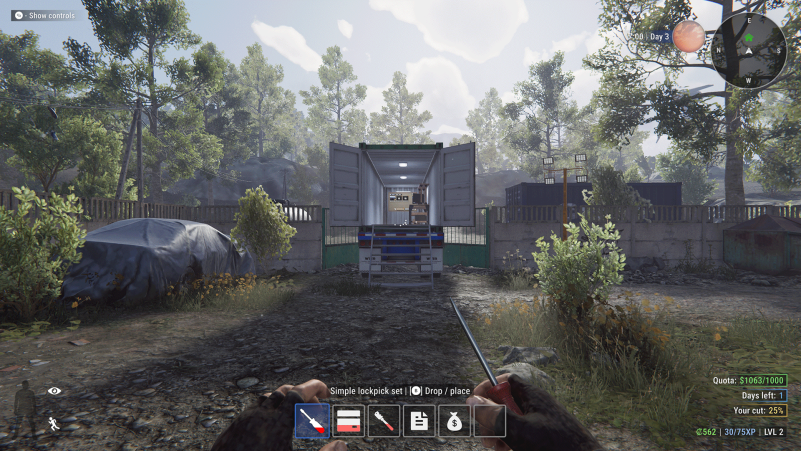
The main game mode consists of three-day cycles to accumulate enough loot to fulfill a quota. The quota increases each cycle until the player faces failure.
Hardcore Mode is similar but uses only max difficulty, and all progress is reset upon failure.
With the exception of Hardcore Mode, failure isn’t the end. This moment is one of many when Crime Simulator shows its lighthearted charm. Upon failure, the mysterious voice from the jail scene speaks to inform you that you have failed your contract and that bail has been revoked. The player's character is killed and another takes its place. I chuckled as the new character was cautioned to “be better than your predecessor.” Although this gag negates our character's established motivation, it is a reminder that the gameplay takes priority. You died, that doesn’t matter, and now you are back in action.
This game offers hours of fun and make-belief misdemeanors, especially when played with friends. The different locations and randomly generated loot ensure that each run is a little different.
Crime Simulator doesn’t want you to think about lore, mystery, or a story; you are simply there to live out your kleptomaniac fantasies.



Comments (0)